Dining According to Hollywood Free Webinar

Join our Free Webinar on Etiquette!


  🎬🎥🎬🎥🎬🎥🎬🎥🎬🎥🎬🎥🎬🎥🎬🎥🎬🎥🎬
Event Description


For over a century, motion pictures have enthralled, entertained and educated audiences around the world. Famous lines from hit movies, can immediately transport one back to the theater, to when they first heard the immortal words. “I’m the king of the world!”… “There’s no place like home.”… “ I’ll be back.”… “Supercalifragilisticexpialidocious.”… “ “Here’s looking at you, kid.” “ Houston, we have a problem.”… "I have a head for business and a bod for sin."…  


All have resonated with movie audiences and pop culture for decades after the movies first played. Manners and mannerisms too, along with “etiquette lessons” seen in films, have affected pop-culture and moviegoers. I know this, due to the fact that so many of my etiquette class students over the last 33 years, young and old, have mentioned scenes from movies that left lasting impressions on them. 

The movies are numerous. In this webinar, we will be covering many of them. Which motion pictures got the manners just right? Which motion pictures got the manners wrong? Which motion pictures should have steered clear of teaching manners to the theater going public? Which movies equated good manners with snobbery? Which movies made etiquette appear necessary for a civil society to thrive? 

We will cover the films that have tickled us with their style in slyly teaching proper manners and mannerisms. We will cover the films which really got things muddled and were anything but helpful in teaching the theater going public that learning manners can be fun. 

From delightful to dreadful, and back to delightful again, we are going to discuss these motion pictures, which have most stuck with us while entertaining us at the same time. Sit back, grab your popcorn and enjoy our visit to the movies. No 3-D glasses will be required!

Some of what we will be discussing…

Part 1: Confusing Utensils in Films 
Part 2: Confusing Place Settings in Films 
Part 3: Unusual Foods in Films 
Part 4: Place Settings in Films 
Part 5: Poor Table Manners 
Part 6: Etiquette Lessons in Films 


When is this event happening?

The event will be on via Zoom, Saturday, 23rd September 2023, 4 pm - 5 pm, Pacific Standard Time, (PST, California USA).


Will I be able to watch the event at another time?

We are recording the event and posting it via YouTube.  You can watch our last event.


As a beginner, is this event suitable for me?

Beginners are welcome, and we hope that you enjoy the event.


How much is the event?

This event is free.


Do you accept tips? 

We have been asked if we accept tips.  The answer to that is yes, we do.  If you enjoy the information given, you are welcome to tip today.


Questions can be sent to the Administrator prior to the event and during the presentation. 


19th Maura will answer as many as possible in the Question & Answer session following the presentation. 

Please email your questions to: theetiquettechannel@gmail.com


Link to the Free Webinar –– https://events.humanitix.com/dining-according-to-hollywood-the-art-of-dining-on-film


Gif's, video and photos credits: 20th Century Studios, Paramount Pictures, Paramount Home Entertainment, Walt Disney Pictures, Buena Vista Pictures, 21st Century Fox, CBS Media, Viacom, CBS Studios, Columbia Pictures, ITV, Focus Features, Universal Pictures, Sony Pictures, Canva


`

Etiquette for Coats of Arms

… and How I Became a Baroness
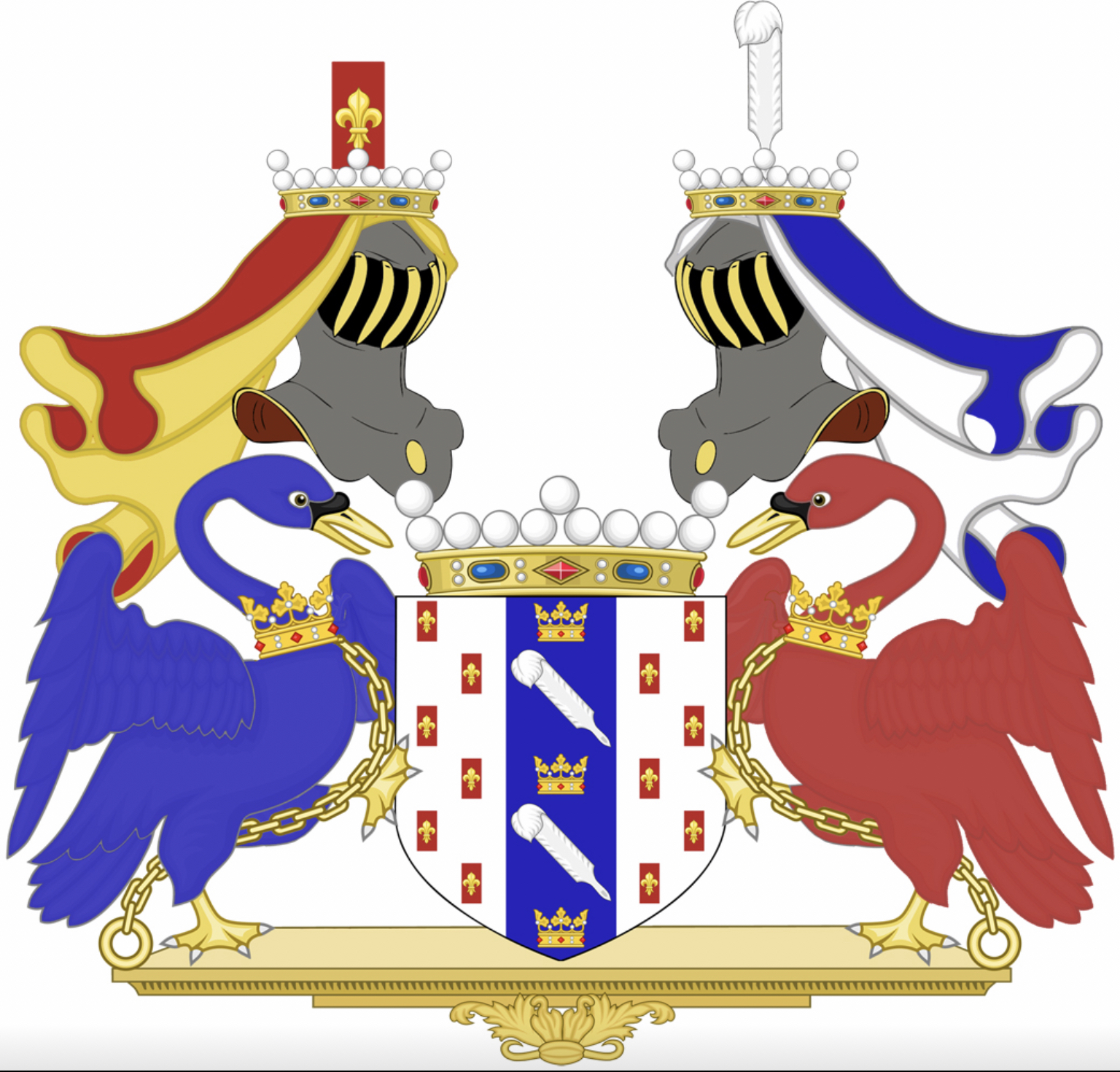
In June of 2019, I was truly surprised and honored to learn that I had been elevated to the rank of Baroness in the Principality of Lorenzburg. This proclamation was sent to me by His Royal Highness, Prince Freï, along with a Coat of Arms and Heraldic Shield. It was all done to honor my commitment to the world of etiquette and my work in developing and maintaining the Etiquipedia Etiquette Encyclopedia.


The commonest use of the coat of arms is on an ex libris, or bookplate, as a marking for silver, or on fine china, on wedding invitations and announcements, on place cards and menu cards for formal entertaining, and, of course, the device may be painted and framed for wall decoration.


My heraldic shield

The full coat of arms shield with crest and motto or what is known as a “gentleman's heraldic bearings” is never properly used on personal belongings by a woman. Women in medieval days did not normally go forth in battle and therefore did not carry shields. 

It is proper form in England, to which we must look for precedent as we have nothing resembling heraldic authority in our own governmental setup, for a woman to use a crest on her stationery, on personal linens, etc., but never a coat of arms on a shield. The lozenge, however, is approved, and if a British woman is titled she uses the coronet of her rank above it. 

But a woman of an armigerous family, especially is she is unmarried or a widow, may use just the crest or the coat of arms itself but only if blazoned on a lozenge. 

My Coat of Arms
A woman whose father has a coat of arms, but whose husband has not, shows better taste, actually, in saying good-by to it and its feminine modifications once it has been used on her wedding invitations and announcements and, if she wishes, on silver her family has given her. 

A painted coat may be displayed on bedroom or library walls, not too conspicuously, but the device may not be adopted either by her husband or children. No woman ever uses a heraldic motto, for these were invariably aggressively masculine and unsuited to feminine social use. — Amy Vanderbilt, 1952


This article was first posted to the Etiquipedia.blogspot in 2021

Etiquette, Dining and Utensil History Event


You Are Cordially Invited to a Special Online Event with Me (Your Etiquette Sleuth) and Elizabeth Soos, Founder of Auersmont Etiquette in Melbourne Australia

To reserve your space for this free event, click here,

Site Editor, Maura J. Graber of The RSVP Institute of Etiquette, and the founder of the Etiquipedia Etiquette Encyclopedia along with Elizabeth Soos from the Auersmont School of Etiquette and Protocol, are hosting a free online session discovering the origins of dining etiquette and the unique utensils which helped etiquette evolve at the dining table.

In this session, you will learn from Maura about the early history of dining etiquette and how the use of utensils affected early dining etiquette. She will also cover the golden era of flatware design — the “Gilded Age,” training utensils for children and even “able ware” for those with physical challenges. Items shown and discussed will range from the 1600’s to modern day.

Some of what we will be discussing… 

• The Highlights and Timeline of Flatware History with Maura Graber

• Changes in Dining Etiquette Due to the Invention of the Table Fork and Travel Utensils

• The Golden Era of Flatware Design… The “Gilded Age and Edwardian Era”

• Training Utensils for Children from the 19th - 21st Century 

• Able Ware 

• Modern Etiquette Rules for Flatware

Moving to the modern era Elizabeth Soos will provide etiquette tips and tricks to ensure dining elegance with ease and confidence. 

Elizabeth will demonstrate…

• How to use a spoon correctly

• How to use a fork with elegance

• How to use a knife with ease.

When is this event happening?

The event will be on via Zoom, Saturday, 20th May 2023, 4 pm - 5 pm, Pacific Standard Time, (PST, California USA).

Will I be able to watch the event at another time?

We are recording the event and posting it via YouTube.

As a beginner, is this event suitable for me?

Beginners and welcome and we hope that you enjoy the event. 

How much is the event?

This event is free.


Questions can be sent to the Administrator prior to the event and during the presentation. Maura will answer as many as possible in the Question & Answer session following the presentation. 


Please email your questions to: theetiquettechannel@gmail.com

April Etiquette Classes in Ontario

It’s never too early or too late to start developing good manners in your student!

The RSVP Institute of Etiquette has resumed co-ed etiquette classes at the historic Graber Olive House in Ontario California for 2023! 

Co-ed Beginner, Mixed-Youth class, ages 8 -13 will be held Sunday, April 2nd from 2 to 4 p.m.

An Advanced class for Mixed Ages is being held from 12:30 to 2:30 on Saturday, April 22nd. 

*We will be focusing on Restaurant Manners and Manners for Home, Travel and even Abroad in this class!

We will have a Beginner Mixed Ages Youth class, on Sunday, April 23rd from 1 to 3 p.m.

We will be holding a Teen Only Etiquette Class with a date to be determined soon. Lunch is served at all classes.

We always focus on the vital social skills young people need to get ahead in life, but we also reinforce the following subjects:

  • Table Graces, Table Manners, Place Settings
  • Introductions, Responses and Greetings 
  • Respect for Others & Polite Conversation
  • Deflecting Peer Pressure and Using Tact 
  • Tech, Social Media and Mobile Manners
  • Notes of “Thanks,” RSVPs and Regrets
  • Making Eye Contact, Great Posture, Good Grooming and more


The price is only $60.00 per student. Foods are served to practice dining skills and handouts or books will be given to the students. 

Call or text Maura Graber at The RSVP Institute of Etiquette at  800-891- RSVP or 909 923-5650 to secure your registration.

Pre-payment by Check, Cash or PayPal is required.

Youth Etiquette Classes 2023

 I’m pleased to announce I will be resuming youth etiquette classes at the Graber Olive House at the end of January. We’re excited for the new 2 hour classes that will cover everything your student needs to know to attain social self-confidence. See below for details!

Food Service Etiquette and Styles

Service with a smile is more important than which side the food is served from, but it helps to have a server with both the smile and the knowledge!
-
Image source, photo of a page in Town and Country Magazine, 2013


Ever since we were shutdown (just for a few weeks to flatten the curve) back in March of 2020, I have received weekly emails and phone calls with the same types of question… “When will you be teaching or giving seminars again?” “When will you be having another tea and talk?” “When will the Olive House be reopened?” I have been giving pretty much the same answer this whole time… “I’m not sure.”

Yes, there was that brief window when I scheduled private group classes, book signings, teas, etc… back in July. Then, I found out I was not only sick, but contagious. I had to cancel everything, including a long planned, talk and Zoom presentation for the Ontario Museum of History and Art. I was crushed and just now am getting better. I am starting to believe classes will be back up and running for October and the museum presentation will, fingers crossed, be in person on November 6th. We’re even hoping to have a tea along with the presentation. I have to follow the heath department rules, however, as does the Olive House, so I have been looking online to see what that will entail.

I was pleased to find this article below on the State Food Safety website. It’s a great article from 2014 on serving food at the table. I get asked about the etiquette for this on a regular basis, but I always have to warn whomever I am speaking with that not all servers are trained in such skills, and there are several different serving styles now in use.
 Also, most restaurant staff here in the U.S. do not look upon such a job as a career, but as part-time work on the ladder up to something better.   This on Etiquipedia© is an excellent article on varying food service styles, from British Service to Homestyle Service. The new “French Service” has its own article.

I do restaurant and country club staff training, but can’t reach every establishment. And what with many restaurants shuttered permanently, due to this COVID beast we weren’t prepared for, I’m not sure when I will be doing such training again any time soon. The turnover of servers is high and right now, restaurants are desperate for staff. It’s a difficult situation. This article is perfect for the current state of things so I am posting it here for my readers.


Is Left Right?

What side do you serve from?
The correct way to serve food is probably unknown to your customers, but vital to you. This technique requires you place the dishes in front of the customers and take them away from the proper side. Doing so will enhance their overall dining experience.

Chef Albrich, an Austrian-born fine dining expert, suggests that the traditional method of placing dishes from the left and removing them from the right is not always the best way to serve guests. According to him, the custom of serving guests from the left started long ago when food for meals would come out on large trays. Empty plates would be placed in front of guests from the left side, then each one of the plates would be filled with food in their place from the large tray.

“But if you are like most people today and have the plates presented to your guests with the food already on it, nicely displayed and decorated, then it should be served from the right, and it is incorrect to serve it from the left,” Chef Albrich says.

He goes on to outline which foods can be properly delivered from each side of the guest.

Serve from the left

If the place where you work gives its guests empty plates and later fills them at the table, those plates should be given to the customer from the left side. Sides such as vegetables and bread can also be delivered from the left and they should also be removed from the left.

Serve from the right

If the customer’s plate is arranged in the kitchen it should be delivered to them from the right side. Pre-plated food (considering the exceptions above), beverages, all empty plates, and utensils should be served from the guest’s right. All dishes served from the right need to also be removed from the right.

Once again, it is likely that many of your customers won’t know which side is correct when you serve them; however, there is a proper way to serve dishes and you never know when you’ll have a dining expert in your midst! —Jeremy Howard


This post was originally published in November 2014 and has been updated for freshness, accuracy, and comprehensiveness.

Glove History and Etiquette Facts

During the Dark Ages only men wore them. Ladies needed permission from the King to put on gloves. But Catherine di Medici changed all that. Thereafter, gloves became a status symbol among women, with England's Queen Elizabeth I emphasizing her status with more than 2,000 pairs. Today a woman shopping has almost as many kinds, lengths and colors to choose from. And gloves very definitely mark her fashion status.

Do You Have Your Fashion Status Well in Hand?

Choosing a pair of gloves to go with your costume is like selecting a sauce for a very good dish. The wrong choice can spoil everything. Yet ladies can be thankful for such a dilemma because wearing gloves marks their improved position in a man's world. 

During the Dark Ages only men wore them. Ladies needed permission from the King to put on gloves. But Catherine di Medici changed all that. Thereafter, gloves became a status symbol among women, with England's Queen Elizabeth I emphasizing her status with more than 2,000 pairs. Today a woman shopping has almost as many kinds, lengths and colors to choose from. And gloves very definitely mark her fashion status. 

In vogue are sleeveless dresses topped by sleeveless or short-armed jackets or coats, all of which require gloves to make up the fabric deficit. Glove length is described in terms of buttons (a measuring idea the French devised) even though the gloves often may lack buttons altogether. Each button corresponds to an inch measuring from the lowest part of the thumb seam to the cuff of the glove.

Here are the kinds of gloves your accessory wardrobe should Include: 

SHORTY - It stops at the wrist where it may or may not be fastened with a button. The most versatile of all lengths, it looks as well with sleeveless dresses as with long sleeved coats. The trim, style and material determines whether the gloves should be worn with dressy, tailored, day or evening clothes. 

SLIP-ON - Primarily a daytime glove, it has no fastening and ranges from three to five button lengths.

GAUNTLET - It is four to six buttons in length, has a flared cuff, and is pull-on in style. It, too, is primarily a daytime glove.

MOUSQUETAIRE - Lengths range from 8 to 20 buttons and have a buttoned opening on the inner side of the wrist. It is for dressy or formal wear with dresses. 

THE PULL-ONS - The length also range from 8 to 16 buttons. They have no opening or fastening. The elbow length size, about 12 buttons (or longer if worn crushed below the elbow) is the season's most popular length because they take up where cape sleeved, or elbow length, sleeves on new style coats leave off. Longer pull-ons are restricted to evening wear. 

A mere 75 years ago the act of pulling on long gloves was considered to be too intimate to be done in the presence of a gentleman. Today ladies slip them on and off as unblushingly and as casually as hats. Generally speaking, except on formal occasions when a long glove is an integral part of the ensemble, gloves are removed soon after entering a home, theater or restaurant. 

At a party it is not correct to do more than sip from a glass with gloves on. However, etiquette today no longer requires a woman to remove her gloves before shaking hands. — The Sun, 1963 via the Etiquipedia.blogspot. Etiquette Enthusiast, Maura J. Graber, is the Site Editor for Etiquipedia© Etiquette Encyclopedia

Mousquetaire Glove Etiquette and More


The mousquetaire— the glove with an opening at the wrist— is easier to get into and can be rolled back for eating or smoking.— “A woman without gloves is a marked woman. It's like going barefoot to be without them.” - Claire Mc Cardell, 1956


Gloves Called Most Important Costume Accessory – Mid-20th Century Etiquette Advice


“A woman without gloves is a marked woman. It's like going barefoot to be without them.”


Although gloves themselves have changed somewhat since the late Claire Mc Cardell, the designer, made this statement in 1956, the etiquette of wearing gloves has not. They are still the most important accessory of a woman's costume and the one about which there seems to be the most confusion.


Fashion has moved in two opposing directions—extremely casual by day and very formal at night—and it is impossible to be well-dressed without a glove wardrobe that includes various lengths and fabrics.


Long evening dresses have brought the 20-button to 16-button glove back into the forefront of fashion. (“Button,” in glove parlance, means inches measured upward from the base of the thumb.)


White kid is still proper for most evening dresses according to Miss Adelaide Baltimore, glove buyer for Bloomingdale’s. More dramatic women are wearing long black suede gloves with black costumes, and there is some interest in gold lamé or embroidered gloves.


“How long to buy gloves depends on the length of your arms,” Miss Baltimore advised. “With formal dresses the elbow should be covered: this can mean 16-button for some women, longer for others.”


For less formal evening dresses or cocktail dresses, the 10-button to 12-button glove that comes to the elbow is becoming. Wrist-length gloves are sometimes worn at parties by young girls, but the mature woman had better forget them for a while, Miss Baltimore suggested. The “mousquetaire”— the glove with an opening at the wrist— is easier to get into and can be rolled back for eating or smoking.

Gloves for Day

The favorite daytime glove is still the 8-button kid or suede one. Even though all coat sleeves no longer end above the wrist, women like the neat look of sleeve and glove meeting when they move their arms. The silk-lined, kid glove inaugurated in Europe, has made leather gloves easier to slip into and more comfortable. Neutral or black gloves are still daytime favorites, said Miss Baltimore, but her department is selling a surprising number of white kid gloves for day, despite their fragility.


Fabric gloves, now that synthetic fabrics have been given such attractive textures, are practical substitutes for leather and look best in taupe or neutral shades. The long, thick knitted glove, has moved to town along with bulky, country tweeds.


What used to be the driving glove, with a leather palm, is now worn by subway strap hangers and baby-carriage pushers as well as by lady chauffeurs. Cold weather will bring out fur gloves as soft and thick as cats' paws.


American women wear gloves-and keep them on wherever practical. It is correct to wear them while shaking hands, indoors or out. The habit of carrying one glove makes a woman look unfinished. It is a good idea to give oneself a moment before entering a room or a restaurant to replace the glove that came off to pay the taxi driver. — By Angela Taylor, 1963 via the Etiquipedia.blogspot. Etiquette Enthusiast, Maura J. Graber, is the Site Editor for the Etiquipedia© Etiquette Encyclopedia

Etiquette Advice and Tough Love

Sometimes while doing research for the Etiquipedia.blogspot, I peruse old newspapers that I come across. The adverts are always fun to read, along with the “personals” section. I especially enjoy comics and advice for women. It’s a great way to immerse myself in the past and to, for a while at least, forget about the seemingly never ending, 2020 Covid -19 pandemic.

High hem, high heels and high fashion in January of 1929
The other night, I found an especially entertaining newspaper from 1929. The fashion in “Just Among Us Girls” was a vintage blast. As it was in January 1929, and nine months before the famous Wall Street crash, the quip accompanying it was fun and still in good taste. 

The following advice for removing cigarette stains from fingers was interesting. I would have suggested lemon juice, or even vinegar, knowing how well they work with other stains. I guess rubbing alcohol would be out of the question, as this was during Prohibition.
This brief spot below on telephone manners for children, was a nice find. When my kids were little they were continually praised by callers who told me, on more than a few occasions, that they answered the phone more professionally than most people at businesses they called. Being a former telephone operator, I had taught them early how to answer the phone and how to take messages. They knew I took phone manners seriously.
MOTHERS AND THEIR CHILDREN – 
One Mother Says— “I have taught my little girls how to use the telephone. They know they must not shout or speak too low and must listen attentively. I have made them understand that the telephone is not a toy and is only to be used for important calls and conversations. Telephone operators tell me that they have much trouble with children playing with phones and leaving the receivers down or simply wasting their time with foolish calls.” 

The real gem of the bunch was this article below on raising a child with physical handicaps… what we call “physically challenged” today. It’s full of wisdom, common sense, a big helping of tough love and a lot of heart. It is “Guiding Your Child” by Agnes Lyne and well worth the read:

Guiding Your Child

HANDICAPS – To his parents, Dick was the most precious thing in life. When at the age of three he was severely ill with scarlet fever, they watched over him and knew every breath he drew. For days, he hung on the point of death and for many weeks he lay wan and feeble without energy to talk or move. Although before his illness, Dick had already developed a fair vocabulary and was a fine enterprising lad in his play, after it he returned to the ways of his baby days. Slowly he was taught to walk again, and gradually he made friends with his playthings once more. 

But his speech did not come back. He asked for things by crying and pointing, in inarticulate sounds and gestures. He did not respond when spoken to, it seemed as though he had become quite deaf. Appalled by their tragedy, the parents waited on their afflicted baby hand and foot. They watched his expressions and anticipated his wishes. He never had to exert himself to get what he wanted, they rushed to bring it to him at his cry. By the time he was four, his retardation was so marked and his improvement so slight that they took him to a specialist who found that Dick had indeed lost his hearing in one ear, but that there was no other physical handicap. Then a psychologist found that as far as it was possible to judge his intelligence was normal. 

With their new insight and the persistence of their love, his parents decided to make Dick grow up. They left him to get things for himself whenever it was possible. When he grunted and pointed a finger, they said the name of the object he wanted, and not until he had at least made an, effort to repeat the word after them did they let him have it. Slowly he improved. Many a child who has as genuine a handicap as had Dick is injured more by its psychological consequences than by the difficulty itself. Parents need to be on guard, lest the unwise treatment of a handicap becomes more of a drawback than the handicap itself. – By Agnes Lyne, January 1929

Tea Expertise from the Palace

My husband Cliff has always detested marzipan. I could never get him to have any until these (upper right) arrived. He absolutely loves these Buckingham Palace marzipan fruits! He ordered some for me, along with their chocolates, for Valentine’s Day. I got him to try one and subsequently placed an order for him for this past Father’s Day. He still loves the biscuits, but the marzipan is right up there on his list. These fruits remind me of the marzipan fruit my mother used to make at Christmas when I was very little. My granddaughters are quite crazy for them too.

I was able to use these lovelies for “What Have We Here?” book photo shoots in February. – Sterling berry, cherry, strawberry forks, gilded sterling nut dishes, one lone olive fork and a petit fours server.


Yesterday I found an email from the Official Royal Gift Shop and the Royal Collection Trust. The invitation to “Become a Tea Expert” caught my eye. As I love the Royal Collection chocolates and my husband loves the marzipan and biscuits, I thought I’d share these tips:


                        Become a Tea Expert


All you need to know about selecting a tea blend and preparing the perfect cup of tea. Become a tea expert with our tips on choosing the right blend, preparing your tea, and what to serve with your favourite blend.

Make the perfect cup of tea

  • Store tea in a cool, dark place away from strong odours. A tea caddy is ideal.
  • For the best results, we recommend using high quality loose leaf tea.
  • Always use freshly boiled water. For black tea, use water at 95-98 degrees centigrade. For green, white or oolong teas, use water which is just off the boil, around 80 degrees centigrade. You can achieve this by leaving the water for 3-5 minutes after the kettle has boiled.
  • Fine quality leaf teas always taste better when made in a teapot. Our top tip - make sure you warm the teapot first.
  • Water quality varies widely, and soft or hard water will make a tea taste different. It’s best to experiment to find a tea that suits your water. Using a water filter will generally improve the quality of your drink.
  • Add one slightly heaped teaspoon of tea leaves per person, and infuse for at least three minutes. Of course, this varies depending on personal taste, and for a stronger flavour you might add an extra teaspoon ‘for the pot’.
  • Adding milk last allows you to judge the correct amount.


I needed some treats for photos and these fit the bill: The chocolates are on a favorite antique, hand painted, china plate from the 1920’s, in an Art Deco and Egyptianesque design. It’s paired with a gilded sterling bonbon spoon. The chocolates from the Royal Collection shop are always fresh and I can’t suggest one over the other of these two different choices. They are all sinfully delicious. The dark chocolate mints just melt in the mouth. The Rose and Violet creams are rich and so unique. Well worth ordering for a truly different gift. If you havent been on the Royal Collection shop website, it’s a lovely diversion from reading the online news of the day, and you just might see something you’d like to try. 


Featured Post

“What Have We Here?” is Here!

What Have We Here? The Etiquette and Essentials of Lives Once Lived, from the Georgian Era through the Gilded Age and Beyond.. . I have spok...